

Sewage overflows, drought, heavy runoff blamed for massive Chattahoochee River fish kill
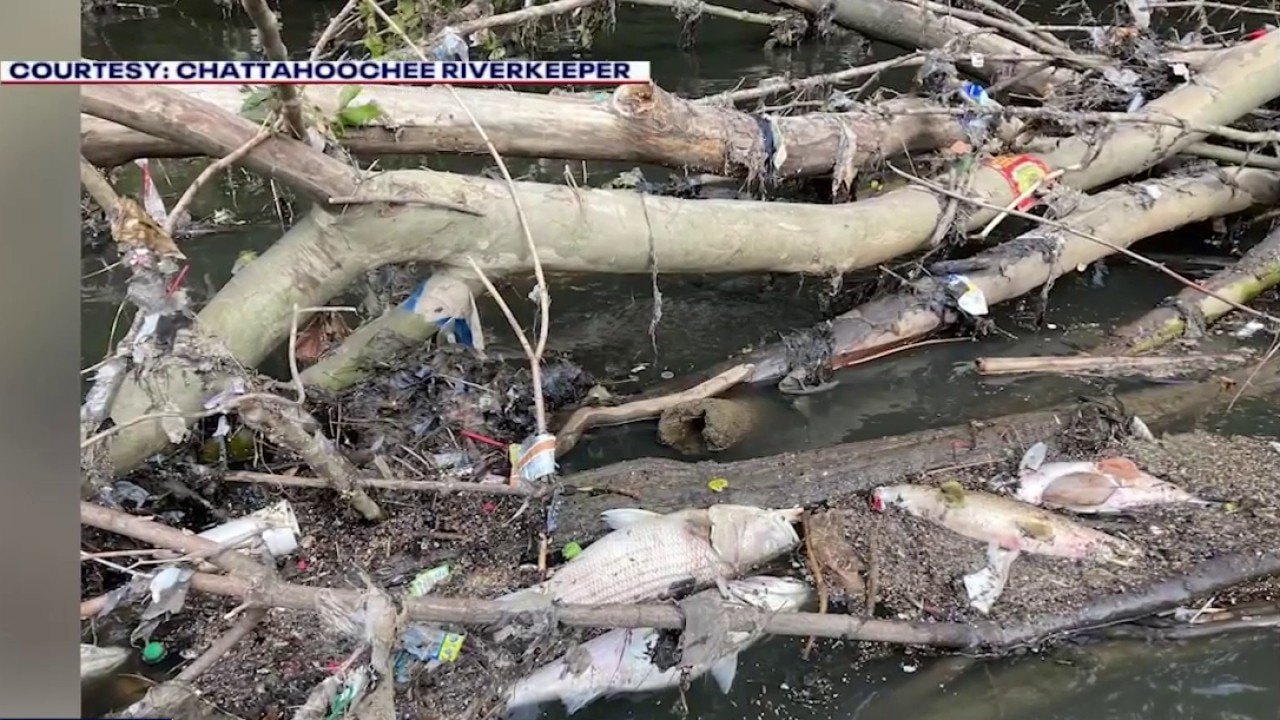
Chattahoochee fish kill explained
The Chattahoochee River keeper says thousands of fish suffocated to death due to low oxygen levels in the river in the past few days. They say it all started with a rain storm that flooded parts of downtown Atlanta. FOX 5's Rey Llerena has the story.
ATLANTA - The Chattahoochee Riverkeeper (CRK) has revealed that a combination of extreme weather conditions and city infrastructure failures likely triggered the unprecedented fish kill discovered along the river late last week.
Drought conditions and torrential runoff collide
What we know:
Prior to the fish kill, a prolonged drought kept the Chattahoochee River moving at just 750 cubic feet per second, with the U.S. Army Corps of Engineers maintaining only the absolute minimum flow requirements, according to CRK.
During rush hour on Wednesday, May 20, a storm dropped three inches of rain in one hour inside the I-285 perimeter. This rain hit warm pavement, raising the stormwater temperature, and washed a high load of pollutants and nutrients into Peachtree Creek.
According to CRK, the volume of stormwater overwhelmed local infrastructure, causing the City of Atlanta’s combined sewer system and West Area Tunnel to overflow untreated sewage into Peachtree Creek. Additionally, the West Area Tunnel treatment system discharged directly into the river. CRK reports that the combination of low river flows, toxic stormwater, and untreated sewage created the lethal conditions for the fish.
Untreated sewage overflows impact the river
What they're saying:
Compounding the polluted runoff, the intense storm completely overwhelmed city infrastructure. Chattahoochee Riverkeeper confirmed that the City of Atlanta’s combined sewer system and West Area Tunnel suffered an emergency overflow, discharging untreated wastewater straight into Peachtree Creek. Simultaneously, the West Area Tunnel treatment system began operating and discharging directly into the river.
CRK investigators believe that the combination of near-record low river flows, thermal pollution from hot pavement runoff, untreated city sewage, and additional treated discharges from surrounding wastewater facilities completely broke the river's ecosystem, creating the lethal conditions for the unprecedented fish kill.
Coordinated active investigations
What's next:
The discovery of the fish kill on Friday, May 22, prompted immediate multi-agency deployment. Previous FOX 5 reporting confirmed that Atlanta Department of Watershed Management (DWM) Commissioner Greg Eyerly and Deputy Commissioner Quinton Fletcher met directly with CRK Executive Director Jason Ulseth on Friday to coordinate a response and evaluate the affected sections of the waterway.
"The Department of Watershed Management takes incidents affecting the Chattahoochee River very seriously. We understand the concern this fish kill has caused for residents and environmental stakeholders throughout the community," Commissioner Eyerly previously stated, noting that DWM remains committed to transparency as findings emerge.
The Georgia Department of Natural Resources (DNR), the Georgia Environmental Protection Division (EPD), and Atlanta’s DWM are all conducting formal investigations into the event. CRK has pledged to continue its independent investigation as well.
The Source: The information in this story was compiled from an official investigative update released by the Chattahoochee Riverkeeper, alongside previous FOX 5 Atlanta reporting on the joint agency response and water quality testing efforts.